
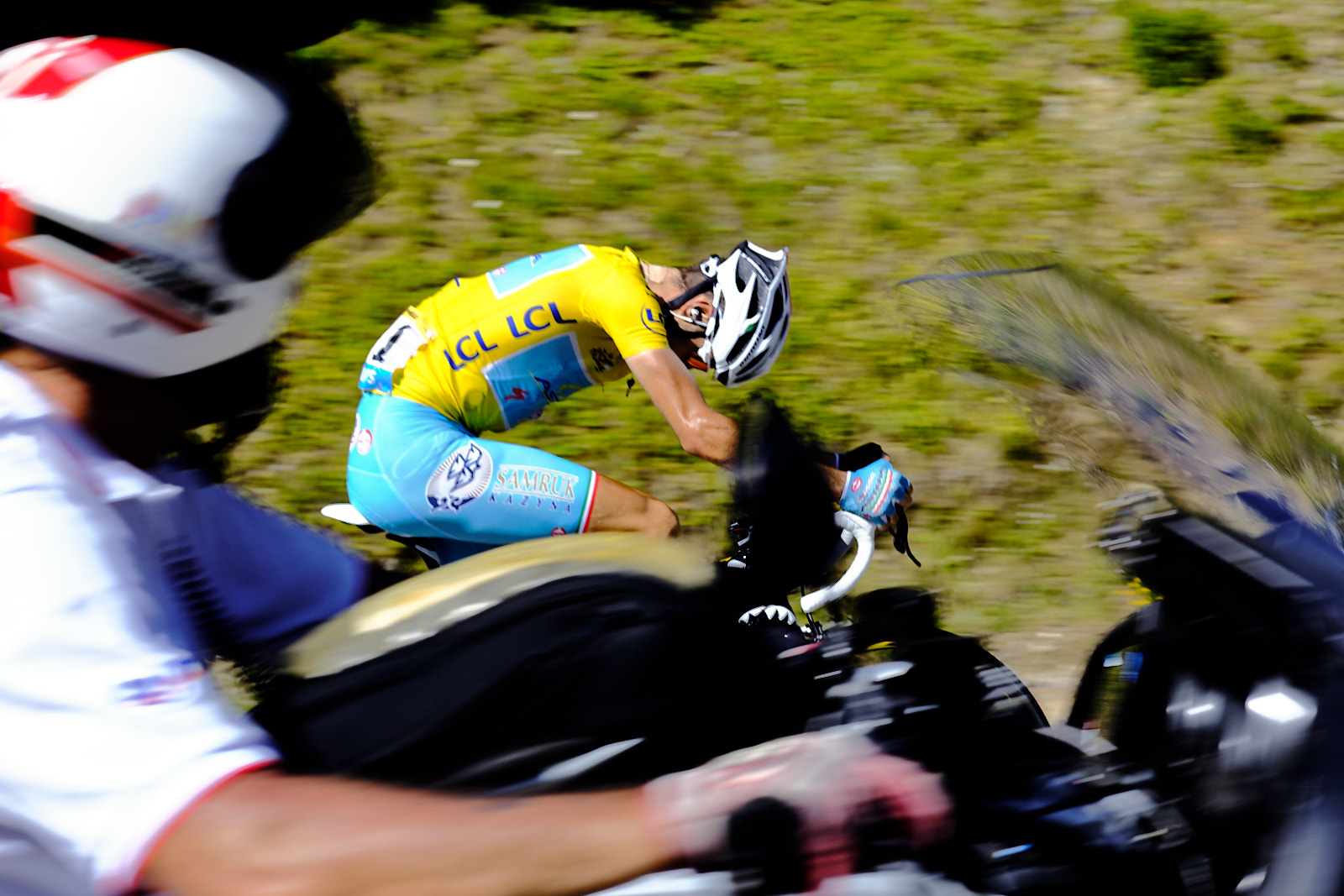
Standing at the roadside of a mountain stage as the peloton comes through is a bucket-list day for a lot of road cyclists. The good news: you can plan it. You just have to start early enough and get a few things right. This guide covers how to watch a stage of the Tour de France or Giro d’Italia as a spectator – from picking the stage to race day.
Giro or Tour? The honest comparison
Both races run through high mountains, but as a travel destination they are very different.
| Giro d’Italia | Tour de France | |
|---|---|---|
| Time of year | May | July |
| Weather in the high mountains | cold, snow possible on the highest passes, stages occasionally shortened | mostly settled and hot; heat is the bigger problem |
| Crowds on the climb | large but spread out; on many passes you can still find a spot on race day | huge; the iconic climbs are taken days in advance |
| Accommodation | a little easier and cheaper, but the Dolomite villages are small | scarce and expensive; the Alpine stage towns sell out months ahead |
| Booking lead time | 2–4 months | 6–12 months for the famous mountain towns |
| Character | narrow lanes, steep ramps, a more relaxed crowd | bigger roads, enormous crowds, the full show |
In short: the Giro is the easier first spectator trip, the Tour the bigger spectacle with more effort.
Choosing the right stage
Not every stage makes an equally good day out:
- Summit finish – the stage ends at the top of the climb. Maximum tension, maximum crowds. Alpe d’Huez, Zoncolan, Mont Ventoux.
- Pass crossing – the route goes over the pass and carries on beyond it. The summit is packed, but the ramps below are calmer and you see the riders working for longer.
- Individual time trial – riders come through one by one, a minute apart. Little crowding, plenty of time to see everyone. Underrated.
- Flat / sprint stage – the peloton is past in seconds. Still fun for the atmosphere in the finish town, but nothing as a mountain experience.
If you only have one day, pick a pass crossing with several climbs or a summit finish on a legendary final climb.
When the route is announced – and when you have to book
The Tour de France presents its route for the following year in October in Paris. The Giro unveils its route in autumn. From that moment the stage towns and climbs are fixed – and rooms in the well-known mountain towns are gone within days.
Timeline:
- As soon as the route is presented: pick your stage, book accommodation in the valley or stage town (refundable), sketch out how you’ll get there.
- 3–4 months before: reserve a motorhome pitch if you want to stay on the mountain.
- A few weeks before: check the stage’s exact timing – start time, estimated passage on the climb, road-closure windows.
Getting there and where to stay
Three approaches work well:
- Motorhome on the mountain – the classic Tour experience. You drive up one or two days ahead, before the road closes, and park right on the route. Come early, be self-sufficient, take your rubbish back down.
- Valley or campsite base plus riding in on race day – you stay down in the valley and ride to the route on your road bike. The most flexible option.
- Shuttle or public transport – some mountains run feeder buses; otherwise take the train to the valley and ride or walk up.
The key point: the race route closes to motor traffic about four hours before the riders come through – but cyclists are almost always still waved past the barriers. That’s the easiest way to reach a mountain stage: roll from the campsite or valley town to the route on your road bike, long after the road has shut to cars. (This doesn’t apply to motorhomes – those have to go up one or two days ahead.)
Riding the climb yourself the day before
The best part of a spectator trip is often not race day but the day before: you ride the climb that will decide the race tomorrow – empty road, your time, your pace. Plan it for early morning, before the traffic and the motorhomes build up, and carry enough to drink; mountain villages often have just one fountain and one café.
Anyone who takes the chance to ride one of the great climbs – Alpe d’Huez, the Col du Galibier, Mont Ventoux, the Stelvio, the Passo di Gavia or the Passo del Mortirolo – should record the GPS file. It becomes a poster later (more on that below).
The best spectator spots on the iconic climbs
A few tried-and-tested places:
- Alpe d’Huez – the numbered hairpins. Bend 7 («Dutch Corner») is the loudest and taken earliest. The lower bends, 21 down to 16, are steep and often clearer.
- Col du Tourmalet – the final kilometres above the treeline, with the view back down the valley. The summit is packed; two or three kilometres below it you have room.
- Col du Galibier – the ramp from Plan Lachat, where the road kicks up and the group falls apart.
- Mont Ventoux – from Chalet Reynard the forest ends and the lunar landscape begins. This is the most striking spot – and the windiest.
- Col de l’Iseran – when the highest pass of the race is on the route, the altitude alone is the experience. Dress warm.
- Passo Pordoi – in the middle of the Sellaronda, with the Dolomite walls behind you. Easy to combine with other passes into a ride of your own.
- Zoncolan and the Mortirolo – the hardest Giro climbs. No panorama, but ramps beyond 15 % and spectators close enough to touch the riders.
On race day: timing, caravan, what to bring
How the day unfolds on the mountain:
- Be there early. On the well-known climbs you want to be up there several hours before the race passes – the good spots on the famous hairpins are otherwise long taken.
- Publicity caravan. At the Tour, a kilometres-long advertising convoy rolls through about one to two hours ahead of the riders, throwing freebies into the crowd. Kids love it; it’s part of the day.
- The riders themselves. On the climb the passage takes a few minutes depending on the groups, longer in a time trial, seconds on the flat. A radio, a race app or the neighbour with signal keeps you up to date on where the race stands.
- Bring: water, sun protection, a layer against the wind, cash, something to sit on. There’s usually nothing to buy up top.
Roadside etiquette
A few rules that make the difference:
- No pushing riders, no running alongside. It looks harmless and has caused serious crashes – a single carelessly held sign triggered a mass pile-up in the peloton in 2021.
- Look at the road before you step onto it, and hold on to children and dogs. Motorbikes and team cars follow close behind the riders.
- Keep flags and banners out of the riders’ faces.
- Take your rubbish back with you – including the caravan freebies. The passes are natural landscapes.
Afterwards: the stage on your wall
If you rode the climb yourself the day before the race, you have a GPS file worth more than any jersey from the fan shop. We turn it into a poster of the route drawn from above – with distance, elevation gain and, optionally, your name, the date and your time.
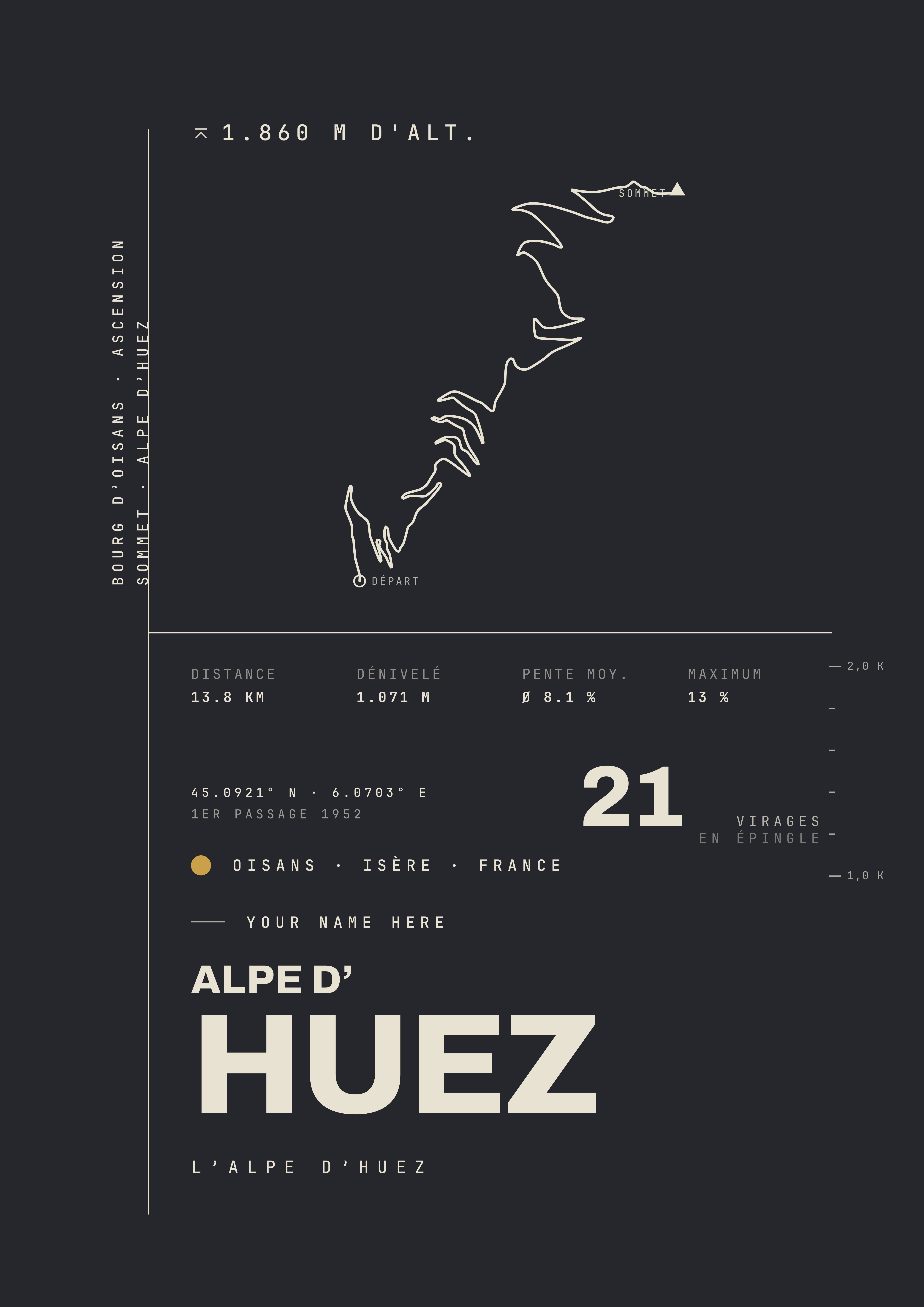
The great climbs also come ready-designed in the pass series, each with the route drawn from above and the key numbers. Which passes those are and what makes them special is in our guide to the most legendary Alpine passes. If the trip is meant as a gift, our gift guide for road cyclists has more ideas – or you go straight for a gift voucher. And for cheering at a city marathon the same logic applies – just with the metro instead of a road bike.