
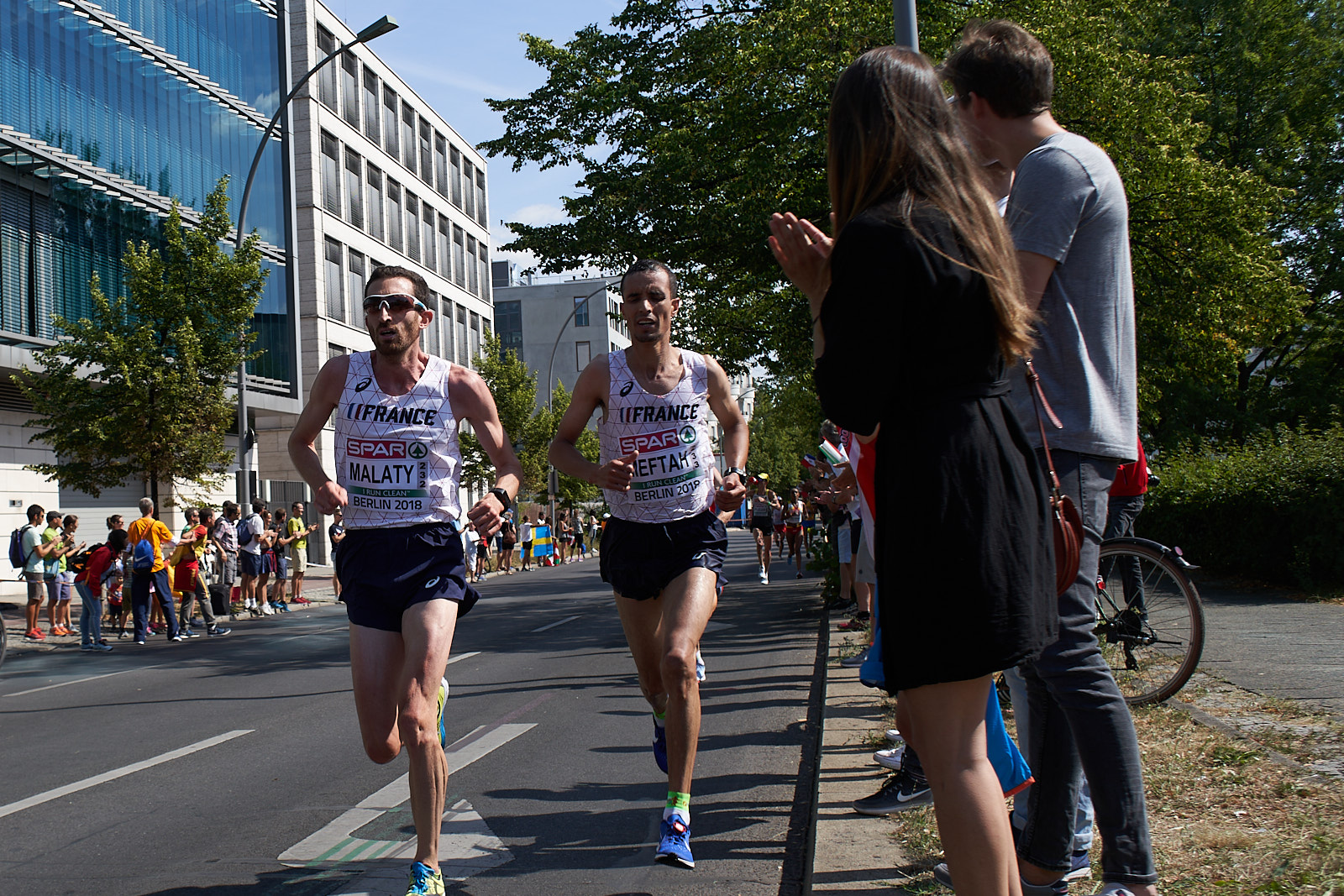
Anyone running a marathon has trained for months. Anyone standing on the course helps decide how kilometre 32 feels. Cheering well is a small logistics job of its own – and the single best trick is the metro. It lets you catch your partner, your friend or your parents not once but at two or three points.
Beforehand: tracking, finish time, meeting point
Sort out three things before race day:
- Set up tracking. Almost every big marathon has an official app or web tracking by bib number. It shows splits at every timing mat, usually every 5 km – so you know on the move whether you need to hurry.
- Estimate the finish time. Ask for a realistic pace. Pace times kilometres gives the arrival time at any point: 5:30 min/km means kilometre 30 after about 2 h 45.
- Agree a meeting point for afterwards. The mobile network around the start and finish is often overloaded on race day. Fix a specific place and time in case messages don’t get through.
The metro tactic
The mistake most people make: trying to follow the course on foot. It doesn’t work – the runners are faster. A city marathon route is one big loop, and the metro runs straight across the chord. While your runner covers ten kilometres of course, you’re at the next point in ten minutes.
How to do it:
- Put the course map next to the transit map and find two or three points connected by one line or a single change.
- Check the Sunday timetable – many networks run less often at the weekend. Allow a minute or two on foot from the station to the course.
- Buy a day pass in advance. On race day the ticket machines at the stations near the start and finish are mobbed. Get your ticket the evening before or in the app.
In Berlin, London, Paris, New York, Vienna or Valencia the network is dense enough that three cheering stops in one morning are realistic.
Which points on the course
Not every kilometre is worth the same:
- Kilometre 8 to 12 – the runners are fresh and in good spirits, the mood is relaxed. Easy to reach, often close to the start.
- Kilometre 30 to 35 – «the wall». This is where it gets hard, and where a familiar face counts most. If you can only stand in one place, stand here.
- Just before the finish – the last few hundred metres before the finish arch. Spectators usually can’t get into the finish area itself, but they can get to the approach.
With three stops: one early, one at the wall, one at the end.
Timing: when you need to be at the point
Worked example for a finish time of around 3 h 50 (about 5:27 min/km):
- Kilometre 10 after about 55 minutes
- Kilometre 32 after about 2 h 55
- Kilometre 41 after about 3 h 44
Use your runner’s wave start time as zero – not the elite start – and allow 15 to 20 minutes of buffer at every spot. Runners go faster or slower than expected, and the metro can jam. Better to arrive early and wait. The elite field and the wheelchair racers often start well before the mass waves.
Being seen and heard
- Agree the side in advance. «I’ll be on the right, around kilometre 31, just after the bridge.» A runner going past doesn’t scan a thousand faces.
- A sign with the first name – big, thick lettering, readable from ten metres.
- Wear a loud colour. A bright jacket, a balloon, anything that stands out from the crowd.
- Call the name, not just «go!». Your own name out of the crowd pulls the eye.
- Pick a slightly quieter spot over the thickest crush – you disappear in the crush.
Supplies: only at the official points
Your own gels, bars or drinks may only be handed over at the official aid stations, not somewhere along the barriers. So don’t plan on passing something across at halfway – what the runner needs on the way they carry themselves or pick up at the stations. Your job on the course is the voice, not the resupply. Save the dry clothes and snacks for after the finish.
Roadside etiquette
- Don’t step onto the course and don’t run alongside your runner – at some races an escort counts as outside assistance.
- No hug on the move. A shout and a clap are enough; the rest comes after the finish.
- Leave room for other spectators, no flash photography, hold on to children and dogs.
- Move to the station promptly after cheering – other people want to get on too.
After the finish
The finish area is crowded, and a runner stiffens and gets cold quickly once they stop. Help out:
- Family reunion area. Big marathons have one, usually sorted by the first letter of the surname. Remember that letter in advance.
- Bring warm things – a jacket, a dry shirt, something to eat and drink, a power bank. The foil blanket from the finish bag doesn’t last long.
- Plan short distances. Straight after the finish nobody wants to walk two more kilometres to the metro.
Afterwards: the route on the wall
After the race your runner has a GPS recording of 42.195 kilometres across the city. We turn it into a marathon poster with the route drawn from above – with distance, finish time and, optionally, name and date. More examples are on the running poster page.
For Berlin, London, Paris, New York and Vienna the route comes ready-designed; any other one you upload as a GPX file. As a surprise at the finish – or, if time is short, a gift voucher. If you need the same trick for cycling: the spectator guide for the Tour de France and Giro d’Italia works exactly the same way.