
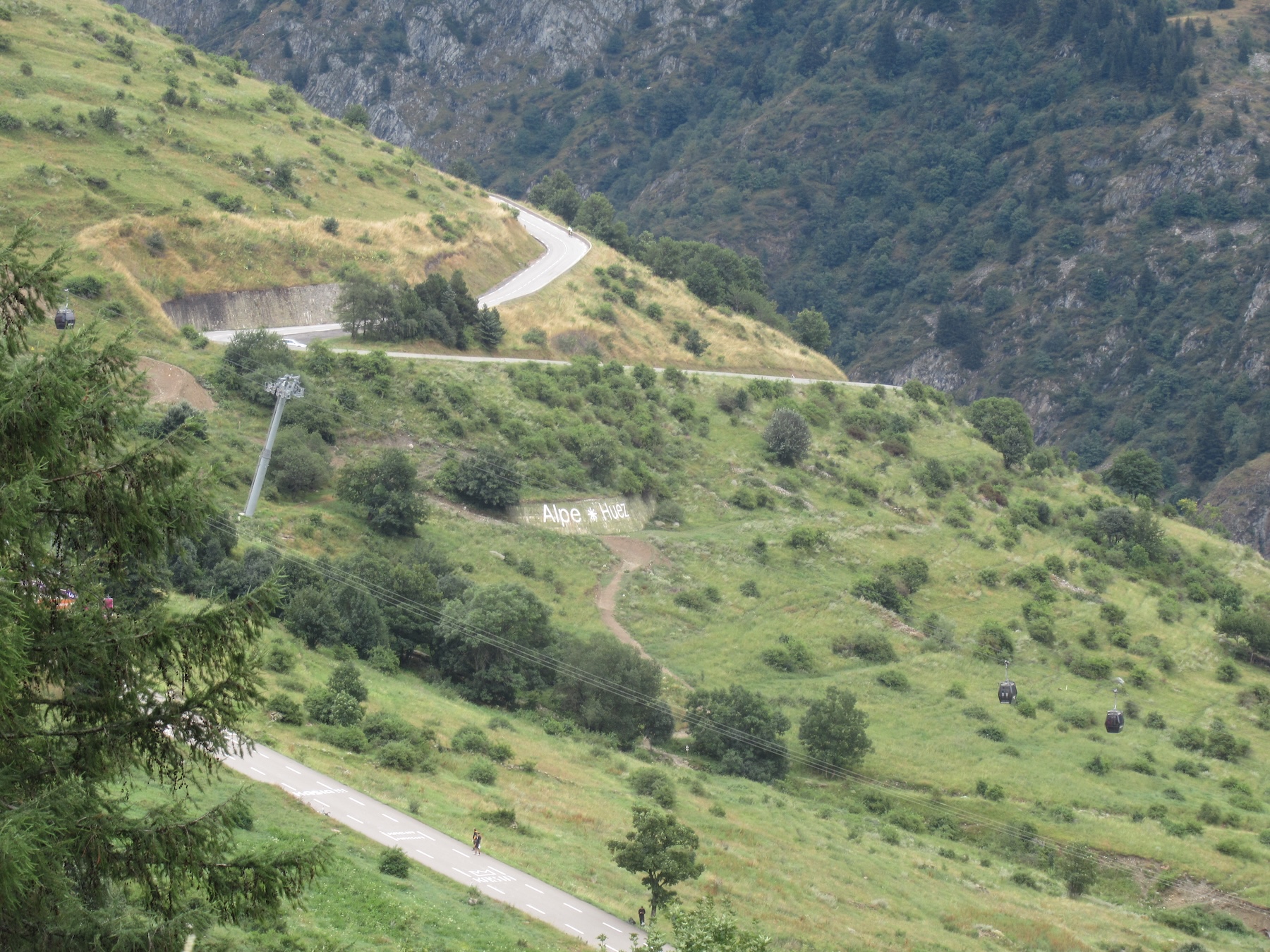
No Tour de France climb is as famous as this one: 13.8 km from Le Bourg-d'Oisans up to Alpe d'Huez, 8.1% on average and exactly 21 hairpins. Each one is numbered, each carries the names of stage winners – and on race days one of them belongs firmly to the Dutch. Here's the story behind the bends.
The numbers
- Start: Le Bourg-d'Oisans, about 720 m
- Finish: Alpe d'Huez, 1,860 m
- Length: 13.8 km
- Climbing: about 1,120 m
- Average gradient: 8.1%, with the steepest sections right at the start
- Hairpins: 21, numbered from 21 at the bottom to 1 at the top
Why every hairpin has a name
In 1952 a Tour de France stage finished at the top of the Alpe for the first time – Fausto Coppi won. The lowest bend, number 21, is dedicated to him. From there the plaques follow the line of stage winners upwards to Giuseppe Guerini on bend 1. Guerini won in 1999 even though, a few kilometres from the finish, a spectator taking a photo knocked him off his bike.
Once all 21 bends had been allocated, the count started again from the bottom. That's why several signs now carry two names – bend 12, for example, honours both Luis Herrera and Tom Pidcock.
Bend 7: Dutch Corner
On race days, bend 7 is a sea of orange. Dutch Corner owes its name to the era when Dutch riders ruled the Alpe: Dutchmen won eight of the first 14 stages here, starting with Joop Zoetemelk in 1976. Their fans came – and still come, with music, smoke and plenty of beer.
The records
For more than 30 years, Marco Pantani's 1995 ascent was the fastest: 36:40. The mark fell at the 2026 Tour. On stage 19, Tadej Pogačar rode the 21 hairpins in 35:26 and won on the Alpe for the first time. The next day the Tour climbed it again – this time via the Col de Sarenne. In total, more than 30 Tour stages have finished on the Alpe.
How long amateurs take and what counts as a good time is in our article What Is a Good Time on Alpe d'Huez, the Stelvio and Mont Ventoux?
Tips for your ascent
- Don't start too fast: the first two kilometres after Le Bourg-d'Oisans are the steepest. Go too hard here and you'll lose far more time in the bends above.
- Count the bends: the signs show the number and altitude. Working from hairpin to hairpin instead of thinking about the top keeps your pace even.
- Start early: the south-facing slopes heat up quickly. Mornings are cooler and quieter.
- Water: start with two full bottles – in high summer one is quickly empty on the climb alone.
- Timing: the official Strava segment starts at the foot of the climb. For a fair comparison, use the segment time, not the elapsed time of your ride.
- La Marmotte: the famous sportive over the Glandon, Télégraphe and Galibier finishes on the Alpe – with the 21 hairpins as the finale.
The 21 hairpins on your wall
Seen from above, the 21 hairpins form a pattern no elevation profile could ever show. Our Alpe d'Huez poster draws the climb as a line, with distance, climbing and hairpins – with your name, the date of your ascent and your time if you like. More climbs are in the pass series. For a ride that's all your own, such as the Marmotte, upload your GPX file.